


Vitalik’s ‘Paranoid Mode’: Tor, Zero-Knowledge Payments, and the Fight for Private AI
Vitalik Buterin just open-sourced a “paranoid mode” wrapper for AI agents combining Tor, zkAPI payments, cover traffic, and local prompt rewriting. Here is how the four-layer privacy stack works — and where it still falls short.
 OzeroPublished October 18, 20265 min read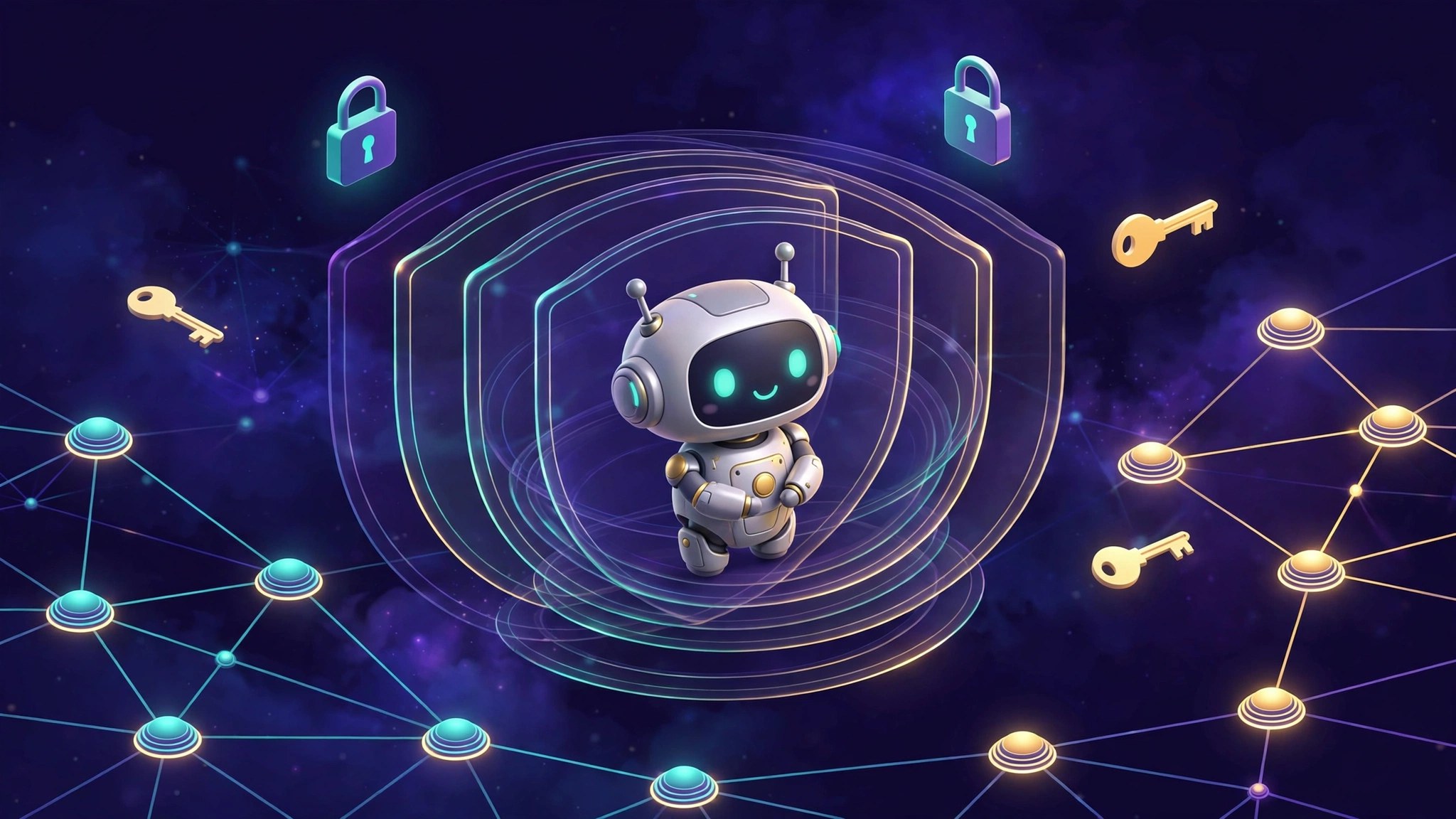
On October 16, 2026, Vitalik Buterin published something unusual for an Ethereum co-founder: not a protocol upgrade, but a personal privacy rig. In an X post, he described a “paranoid mode” wrapper for his AI agent harness, Pi — combining the Ethereum-based zkAPI payment system, the Tor anonymity network, random cover traffic, and a locally running language model. He open-sourced the code.
What AI providers can learn about you
Every time you use a hosted AI service, you leak more than your prompt. Payment records tie requests to your identity. Your IP address reveals location. Your writing style is fingerprintable. And the prompt contents themselves may contain sensitive information. Buterin’s setup is designed to close all four of these channels at once.
The four layers
- Tor routing: each conversation is assigned a separate Tor circuit, and the agent harness runs inside a Bubblewrap sandbox with all traffic forced through Tor via torsocks (MicroVM isolation is being experimented with).
- zkAPI payments: a privacy-preserving payment layer launched October 1 by the Ethereum Foundation and the Open Anonymity Project. Users deposit ETH or USDC into an Ethereum vault and spend private credits via zero-knowledge proofs — without linking each API call to the funding source.
- Cover traffic: randomised decoy network requests mask the timing and pattern of genuine ones.
- Local prompt rewriting: before anything reaches the external provider, a local LLM (Buterin uses Qwen3.8-Flash-Next; bring your own model) rewrites the prompt to strip identifying phrasing.
The whole stack is bundled as an OpenAI-compatible daemon, so it slots in as a privacy layer between existing agent software and any hosted model — no need to rewrite your tools.
Honest about the limits
What makes this post interesting is Buterin’s candour about what does not work yet. Latency is “quite a bit” higher, especially when starting new conversations. More fundamentally, he warns that Tor’s cover-traffic trick is only reliable against passive observers — if the AI provider colludes with the Tor guard node and manipulates timing, the protection degrades. His suggestion: a specialised mixnet with constant cover traffic, at the cost of higher bandwidth.
He also notes that cheaper zkAPI deposit and withdrawal gas costs are coming to Ethereum mainnet, which would lower the price of private payments.
“It’s getting quite usable! Though you definitely still pay quite a bit in increased latency, especially when starting a new conversation. — Vitalik Buterin”
Ozero’s take
This is the clearest sign yet that crypto privacy tech and AI agents are converging into one stack. Zero-knowledge proofs started as a scaling story, became a privacy story, and are now becoming an AI-infrastructure story. For builders, the pattern to watch: every AI agent that handles money will eventually need private payments, private networking, and private prompts — and Ethereum tooling is positioning itself as the default answer to all three.
Risks to watch
- This is experimental open-source code, not a polished product. Do not route sensitive work through it without understanding the threat model — especially the timing-attack caveat.
Conclusion
Buterin’s paranoid mode will not be how most people use AI tomorrow. But the components — ZK payments, Tor-routed agents, local rewriting — are a preview of what “private by default” AI tooling looks like. The race now is making it fast enough that paranoia becomes the default.